
Do I Need a Bone Graft for Dental Implants?
A bone graft is not automatically part of implant treatment, but it is common. You may need one if your jawbone is too thin, too short, or too weak to support an implant in a stable, long-lasting way.
Dental implants rely on bone support more than many patients expect. The implant is placed in the jawbone, and it needs enough surrounding bone to heal securely and handle chewing forces over time.
Empower Dental Rancho offers bone grafting in Rancho Cucamonga for patients who need jaw reconstruction as part of implant care.
Why Bone Matters for Implant Success
A dental implant does not simply sit in the gums. It is anchored in bone, and the body must bond to its surface through a process called osseointegration.
If there is not enough bone, the implant may be harder to place in the right position. Even if placement is possible, long-term implant stability may be reduced when support is limited.
That is why implant planning looks beyond whether a space is empty. The real question is whether the site can support the implant mechanically and biologically for years to come.
When a Bone Graft May Be Needed
Bone loss often begins after a tooth is removed or lost. Once the tooth root is gone, that area of the jaw no longer gets the same stimulation from chewing, so the bone can gradually shrink.
A bone graft may be recommended when imaging shows limited bone width, height, or quality. This can happen in several common situations.
After a Tooth Has Been Missing for a While
The longer a tooth has been missing, the more likely the ridge has narrowed or flattened. Sometimes a site looks normal from the outside but still shows significant bone loss on a scan.
If a tooth was lost years ago and the space remained open, those bone changes may still affect implant planning.
After Gum Disease
Periodontal disease can damage the bone that supports the teeth. If a tooth was lost because of gum disease, the remaining bone may not be ideal for immediate implant placement.
If gum disease is part of the picture, appropriate gum treatment is an important step before implant planning.
After Infection or Trauma
A severe dental infection can destroy bone around a tooth root. Facial trauma can also change the shape of the jaw and leave a defect that needs rebuilding before implant treatment.
In the Upper Back Jaw
The upper molar area is a common problem site because the sinus sits above the roots. After tooth loss, the bone between the mouth and sinus may become too thin, which is why a sinus lift is sometimes part of implant planning.
How Dentists Decide Whether You Need One
This decision usually involves more than a visual exam. Gums can look healthy while the underlying bone is still too limited for predictable implant placement.
Most implant planning includes X-rays and often a cone beam CT scan. This 3D scan helps measure bone height, width, and nearby structures such as nerves, roots, and the sinus.
Dentists also evaluate where the implant needs to sit for a functional bite and a natural-looking result. A site may have enough bone for an implant somewhere, but not enough bone in the right position.
That distinction matters. Placing an implant at a compromised angle just to avoid grafting can create problems with chewing, hygiene, appearance, or long-term force distribution.
Signs You May Be More Likely to Need Bone Grafting
Some patterns make bone grafting more likely, although they do not confirm it. A proper exam and imaging are still needed.
You may be more likely to need a graft if:
- The tooth has been missing for many months or years
- The area looks sunken or narrow where the tooth used to be
- The tooth was lost because of advanced gum disease
- There was a past infection, cyst, or injury in that area
- You have been told there is not enough bone for an implant
- An upper back tooth is missing and the sinus is close to the ridge
- A denture or partial has become looser as the jaw changed shape
These signs can point to bone loss, but they do not replace a diagnosis. Some patients with visible shrinkage still have enough bone, while others with normal-looking gums do not.
Can You Get an Implant Without a Bone Graft?
Yes, many patients do not need grafting. If the bone is adequate in volume and quality, the implant may be placed directly.
This is more likely when the tooth was removed recently, the surrounding bone stayed intact, and there has been limited bone loss. In some cases, an implant can also be placed at the same visit as an extraction if the site is suitable.
Still, avoiding a graft is not always the best choice. The better question is whether the implant will have the strongest, most predictable foundation over time.
If you are considering dental implants as a long-term solution, bone health is a key part of planning.
Types of Bone Grafts Used for Implants
The type of graft depends on where the bone is missing and how much rebuilding is needed. Not every graft is major surgery, and some are relatively limited procedures used to preserve or restore the ridge.
Socket Preservation
This is done after a tooth extraction to reduce bone shrinkage during healing. Socket preservation may help keep the site in better shape for a future implant.
Ridge Augmentation
This is used when the jaw ridge is too narrow or too short. The goal is to rebuild the contour so the implant can be placed in a stronger, more ideal position.
Sinus Lift
A sinus lift adds bone in the upper back jaw when the sinus leaves too little vertical bone for an implant. This is a common, well-established procedure when molars or premolars have been missing for some time.
Minor Grafting at the Time of Implant Placement
Sometimes a small defect is expected or found around the implant site, and graft material is placed during implant surgery. This may help improve contour or fill a limited gap around the implant.
What the Process Usually Looks Like
There is no single timeline for every patient. Some implants are placed at the same time as grafting, while others need a healing period first.
If the bone deficiency is small and the implant can still be stabilized, the dentist may place the implant and graft in one visit. If the defect is larger, grafting may be done first so the area can heal before implant placement.
Healing time depends on the procedure, the site, and your body’s response. Your dentist or oral surgeon should explain whether the plan is staged or combined, and why that approach fits your anatomy.
What Happens If You Skip a Needed Bone Graft
An implant placed in an inadequate bone can face several problems. It may not achieve strong initial stability, it may heal in a compromised position, or it may be harder to keep clean over time.
In visible areas, missing bone can also affect gum shape and the final appearance of the tooth. In back areas, poor support can increase mechanical stress during chewing.
The key issue is not just whether an implant can be inserted. It is whether the implant can function predictably without avoidable structural compromise.
Are There Alternatives to Bone Grafting?
Sometimes there are alternatives, but they are highly case-specific. Depending on the anatomy, a dentist may consider a smaller implant, a short implant, a different implant position, or another tooth replacement option such as a bridge or denture.
These options are not interchangeable in every mouth. A plan that avoids grafting may still involve tradeoffs in durability, appearance, hygiene access, or force distribution.
That is why a second opinion can be helpful if the recommendation is unclear. The best plan should make sense both on the scan and in day-to-day function.
What to Ask at Your Implant Consultation
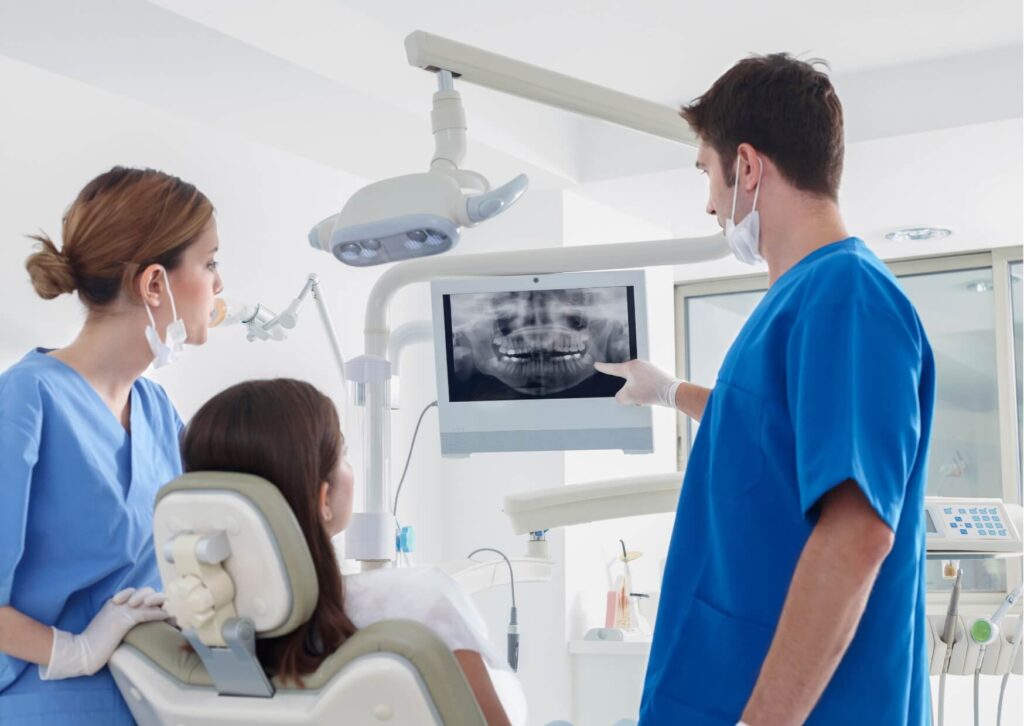
A good implant consultation should explain the anatomy, not just the price or timeline. If bone grafting is recommended, ask what problem it is solving and whether the implant could be predictably placed without it.
Useful questions include:
- How much bone is missing, and in what direction?
- Is the concern bone width, height, density, or position?
- Can the implant be placed now, or is staged treatment safer?
- What happens if grafting is not done?
- Are there reasonable alternatives in this specific case?
- How will grafting affect appearance, function, and treatment time?
Clear answers usually reflect careful planning. If the explanation feels vague, rushed, or inconsistent with the imaging, getting another opinion is reasonable.
When to Seek Prompt Dental Care
If you are planning for implants, seek prompt dental care for swelling, drainage, fever, a bad taste, increasing pain, or a site that is not healing normally after extraction. These signs may point to infection or another problem that can affect bone quality.
If you already had grafting or implant surgery, worsening swelling, persistent bleeding, severe pain, or signs of infection deserve timely follow-up. Urgent red flags should be assessed by the treating dentist or oral surgeon rather than managed at home.
If you are simply unsure whether grafting is necessary, the safest next step is a focused implant evaluation with imaging. That gives a much clearer answer than symptoms alone.
Empower Dental Rancho provides bone grafting and implant planning in Rancho Cucamonga and serves nearby Upland and Pasadena; call (909) 378-8677 to schedule an evaluation.
FAQs
Is a bone graft always required before dental implants?
No. Many implants are placed without grafting when the jaw has enough healthy bone in the right position.
How do I know if I have enough bone for an implant?
A dental exam and imaging, often including a 3D scan, are the usual ways to tell. Symptoms alone cannot reliably show whether the bone is adequate.
Can bone grow back on its own after a tooth is removed?
Some healing happens naturally after extraction, but the ridge often shrinks rather than rebuilding to its full original volume. That is why preservation or grafting is sometimes recommended.
Does needing a bone graft mean I cannot get implants?
No. In many cases, grafting is done specifically to make implant treatment possible or more predictable.
Is bone grafting only for major bone loss?
Not always. Some grafts are relatively minor and are used to improve contour or preserve a site, while others are more extensive.
Should I get a second opinion if a graft is recommended?
That can be a smart step, especially if the recommendation was not clearly explained. Implant planning should be based on anatomy, function, and long-term stability, not just convenience.
Many parents assume orthodontic care starts after all permanent teeth come in. In reality, some…
Dental implants are built to be a long-term tooth replacement. In many cases, the implant…
Choosing between braces and clear aligners is usually less about trends and more about control,…
A beautiful smile starts with good oral hygiene, and continues beyond the dentist chair. Whole…
Flexible Payment Options
Get started in minutes with no impact on your credit—plus take advantage of 0% APR financing for up to 24 months.
- Quick approval process
- Soft credit check only—no effect on your score
- Apply funds to any dental service
Click below to check your eligibility—completely risk-free.