
When Should a Child See an Orthodontist? A Parent’s Guide
Many parents assume orthodontic care starts after all permanent teeth come in. In reality, some bite and jaw concerns can be spotted much earlier.
That does not mean every child needs braces in elementary school. It means a well-timed orthodontic evaluation can show whether growth and tooth development should be monitored or addressed sooner.
A practical rule of thumb is this: many orthodontists recommend a first evaluation around age 7. At that stage, children usually have a mix of baby teeth and permanent teeth, which makes certain bite and eruption patterns easier to assess.
At Empower Dental Rancho, our orthodontics team in Rancho Cucamonga provides timing-focused evaluations and early guidance for children and parents.
Why Age 7 Is Often the Right Time
Around age 7, the first permanent molars and front teeth are often in place. That gives the orthodontist a better view of how the upper and lower jaws fit together and whether teeth are coming in as expected.
This visit is not about starting treatment automatically. It is about checking growth, spotting problems early, and deciding whether to monitor or intervene.
An orthodontist looks at more than crooked teeth. The exam may include jaw symmetry, bite alignment, spacing, crowding, oral habits, and whether any teeth seem blocked, delayed, or off course.
In many cases, the result is simple monitoring. That still helps because it creates a baseline and reduces the chance of missing the best time for early treatment if it becomes necessary.
Signs a Child May Need an Earlier Orthodontic Evaluation
Some children should be seen before age 7. The main concern is usually function and development, not appearance.
Consider an earlier visit if a child has any of these signs:
- Early or late loss of baby teeth
- Difficulty biting or chewing
- Persistent mouth breathing
- Thumb sucking or pacifier use that continues beyond the toddler years
- Teeth that look severely crowded, blocked out, or widely spaced
- Upper and lower teeth that do not meet normally
- A jaw that shifts to one side when closing
- Front teeth that stick out and seem more likely to be injured
- Speech changes that may relate to tooth or jaw position
- Biting into the roof of the mouth or the gums
None of these signs guarantees treatment. They do suggest that a specialist evaluation may be helpful, especially if the pattern is obvious, worsening, or affecting comfort.
What Orthodontists Check at the First Visit
Parents often expect the main question to be whether teeth are straight. Orthodontists usually look more broadly at how the bite works and how the jaws are growing.
The first visit often focuses on whether permanent teeth have enough space to erupt normally. It also checks for crossbite, overbite, underbite, and crowding.
A crossbite means some upper teeth sit inside the lower teeth instead of outside them. An overbite refers to vertical overlap of the front teeth, while an underbite means the lower teeth or jaw sit ahead of the upper teeth.
The orthodontist may review existing dental X-rays or recommend imaging if needed. This can help identify missing teeth, extra teeth, impacted teeth, or eruption paths that are not visible during a routine exam.
In simple terms, the visit answers three questions: Is there a problem now, is there a risk of a problem later, and is this the right time to act or just monitor?
Early Treatment Versus Waiting
One common misunderstanding is that an early orthodontic visit leads straight to braces. In many cases, it does not.
Some children benefit from early treatment, sometimes called interceptive treatment; learn more about early orthodontics.
This approach may help reduce the severity of a developing problem, improve jaw relationship, create room for erupting teeth, or lower the risk of injury to prominent front teeth.
Other children are better served by watchful waiting. If the bite is acceptable and growth is progressing normally, delaying treatment may be more efficient and may reduce total time in appliances later.
That is why timing matters. Starting too early without a clear reason can add cost and treatment fatigue, while starting too late can limit options when jaw growth is part of the issue.
A good orthodontic plan is not early by default. It is early only when it can improve the outcome.
Problems That Often Benefit From Earlier Attention
Not every orthodontic issue needs early care. Still, some patterns deserve closer attention because they can affect development while a child is still growing.
Crossbites and Jaw Shifts
A crossbite can sometimes cause a child to slide the jaw to one side to make the teeth fit together. Over time, that shift may affect how the bite develops and may contribute to asymmetry.
Protruding Front Teeth
Front teeth that project significantly forward may be more exposed during sports, falls, or daily activity. In some cases, early correction can reduce the risk of dental trauma.
Severe Crowding
When there is not enough space for permanent teeth, eruptions can become blocked or redirected. Early evaluation can help determine whether the problem should be monitored, managed with space guidance, or treated later.
Persistent Oral Habits
Long-term thumb sucking, finger sucking, or prolonged pacifier use can affect the bite and the position of the front teeth. The impact depends on how often the habit happens and how long it continues.
Underbites and Significant Jaw Imbalance
When the lower jaw appears ahead of the upper jaw, or the upper jaw seems narrow, growth monitoring becomes especially important. Some cases benefit from earlier orthopedic guidance, which means influencing jaw growth rather than only moving teeth.
What Happens During the Appointment
A first orthodontic visit is usually brief and low stress. The orthodontist checks the teeth, bite, jaw movement, facial balance, and eruption pattern.
Photos and X-rays may be taken if needed. Some offices also use digital scans instead of traditional impressions, which can make the process easier for children.
Families can expect a discussion about whether treatment is needed now, later, or not at all. In many cases, the most useful outcome is a monitoring plan with clear follow-up timing.
This visit can also help separate normal variation from a true developing problem. That matters because mixed dentition, meaning a combination of baby and permanent teeth, can look irregular even when development is still within a typical range.
How a Dentist and Orthodontist Work Together
A general dentist often notices early signs of crowding, bite imbalance, or delayed eruption during routine dental checkups. That does not replace an orthodontic evaluation when a more detailed growth and bite analysis is needed.
Orthodontists have additional training in tooth movement, jaw relationships, and facial development. In practice, the best care often comes from coordination between the family dentist and orthodontist, especially when timing decisions are not obvious.
For more on how these roles differ, read orthodontist vs. general dentist. If a dentist recommends an orthodontic consult, it does not automatically mean treatment is urgent. It usually means the pattern is worth evaluating before growth changes the picture.
Red Flags That Should Not Wait for a Routine Check
Some concerns should be assessed sooner rather than later. Parents should contact a dentist or orthodontist promptly if a child has pain, facial swelling, dental trauma, a bite that suddenly changes, or a jaw that locks or cannot close normally.
A tooth that does not erupt when expected, especially if the matching tooth on the other side came in much earlier, also deserves attention. The same is true for severe crowding that seems to trap a tooth high in the gums or force it to erupt far out of position.
If a dental injury or sudden severe pain occurs, seek emergency care so the problem can be evaluated quickly. These findings do not always mean a major problem, but they should not be left to a wait-and-see approach without professional guidance.
How Parents Can Make the Timing Decision Simpler
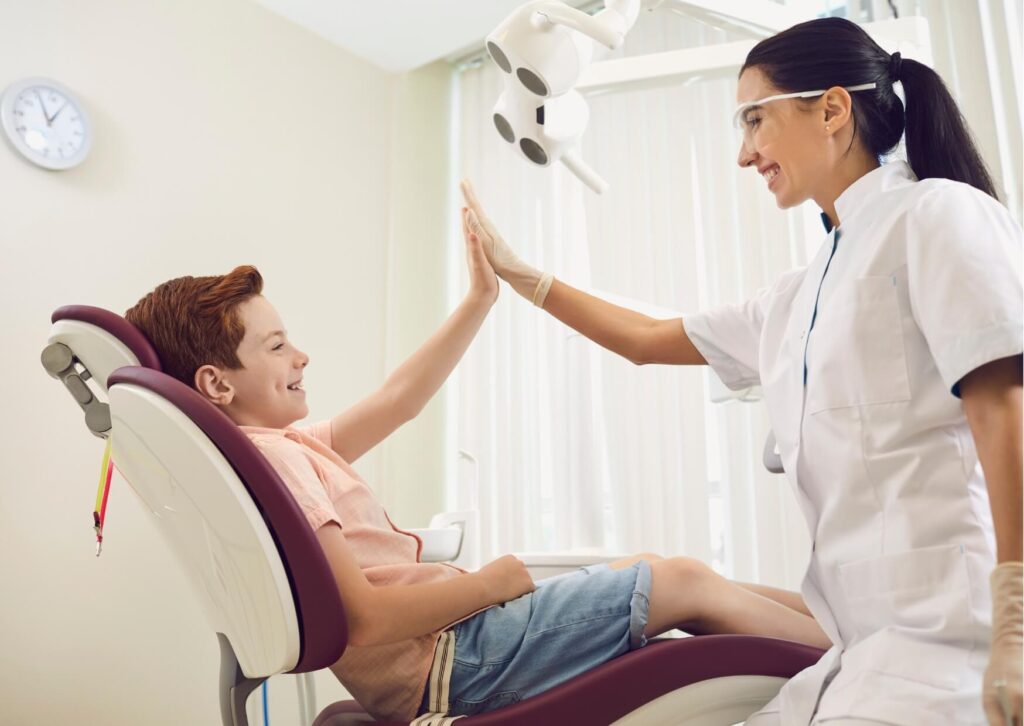
If you are wondering when a child should see an orthodontist, the most practical answer is around age 7. An earlier visit makes sense if there are visible bite concerns, jaw shifts, prolonged oral habits, or eruption problems.
This recommendation is less about rushing treatment and more about avoiding missed opportunities. A well-timed evaluation can confirm that everything is on track or catch a problem while growth still gives the orthodontist more options.
That is the real value of early assessment. It helps families make clearer decisions, reduces guesswork, and supports treatment at the right time rather than simply the earliest time.
If a child has not had an orthodontic screening and something about the bite or eruption pattern seems off, scheduling an evaluation is a reasonable next step. Even when treatment is not needed yet, the visit can provide a clearer roadmap for what to watch next.
Parents who want to understand possible next steps can also review common orthodontic options.
At Empower Dental Rancho in Rancho Cucamonga, our orthodontics team provides comprehensive care for children and families from nearby Upland and Pasadena and includes an in-house orthodontist; call us at (909) 378-8677 to schedule an evaluation.
FAQs
Is age 7 too early if the teeth do not look crooked?
Not necessarily. Some bite and jaw problems are easier to detect from how the teeth meet than from appearance alone.
A child may look fine cosmetically and still benefit from a screening exam.
Does an orthodontic evaluation mean braces will start right away?
No. Many children who see an orthodontist at age 7 or 8 do not begin treatment at that time.
Monitoring is a common outcome.
Can a regular dentist tell if a child needs an orthodontist?
Often yes, at least as a first step. A general dentist can identify patterns that suggest crowding, bite imbalance, or delayed eruption, then refer for a specialist opinion when needed.
What if a child is older than 7 and has never seen an orthodontist?
That is still worth addressing. An orthodontic evaluation can be helpful at many ages, especially if permanent teeth are coming in crowded, the bite seems off, or front teeth are prominent.
Are baby teeth important in orthodontic planning?
Yes. Baby teeth help hold space for permanent teeth and can provide clues about eruption timing, crowding risk, and bite development.
Related Articles
Dental implants are built to be a long-term tooth replacement. In many cases, the implant…
A bone graft is not automatically part of implant treatment, but it is common. You…
Choosing between braces and clear aligners is usually less about trends and more about control,…
A beautiful smile starts with good oral hygiene, and continues beyond the dentist chair. Whole…
Flexible Payment Options
Get started in minutes with no impact on your credit—plus take advantage of 0% APR financing for up to 24 months.
- Quick approval process
- Soft credit check only—no effect on your score
- Apply funds to any dental service
Click below to check your eligibility—completely risk-free.